Heat Pump Blowing Cold Air in Winter: 7 Causes and What to Check
Sometimes it might seem like your heat pump is malfunctioning. Here’s a list of the most common situations that you’ll encounter.


I’m writing this as winter is coming, which reminds me of one of the things I noticed when I upgraded from a gas furnace to a heat pump: it often feels like it’s blowing cold air. When I had a gas furnace, my kids would park themselves on top of an air register on cold mornings, soaking up the nice warmth before they trudged off to school.
Now with a heat pump, the pleasure isn’t the same. Compared to the furnace, the air coming from the heat pump feels cold. Well: it’s not actually cold — it’s just not quite as warm. But that’s actually normal! If you’re worried that your heat pump might not be working quite right, this article will give you a checklist of normal and not normal behaviors from your heat pump.
Why the air from a heat pump air feels cool during normal operation
Compared to furnaces, heat pumps simply don’t generate the same high temperatures that a gas furnace does, and that’s not actually a bad thing.
Most gas furnaces are single-stage, which means that they run at full power whenever they’re operating. This means that even in mild temperatures, when the thermostat calls for heat, the furnace will dutifully turn on and blast hot air into your home, even though your home might only need a little heat.
A heat pump doesn’t generate heat from combustion. Instead, the compressor extracts heat from the outdoor air to create a super hot refrigerant. But that refrigerant never gets nearly as hot as a burning flame, which is why the air from heat pump will feel only warm, and not toasty hot.
At most, a heat pump will raise the temperature of the supply air by around 35°F or so, depending on the outdoor temperature. This will drop as the outdoor air gets colder. Here’s a photo from my heat register on a mild fall day when it was about 58°F outside:
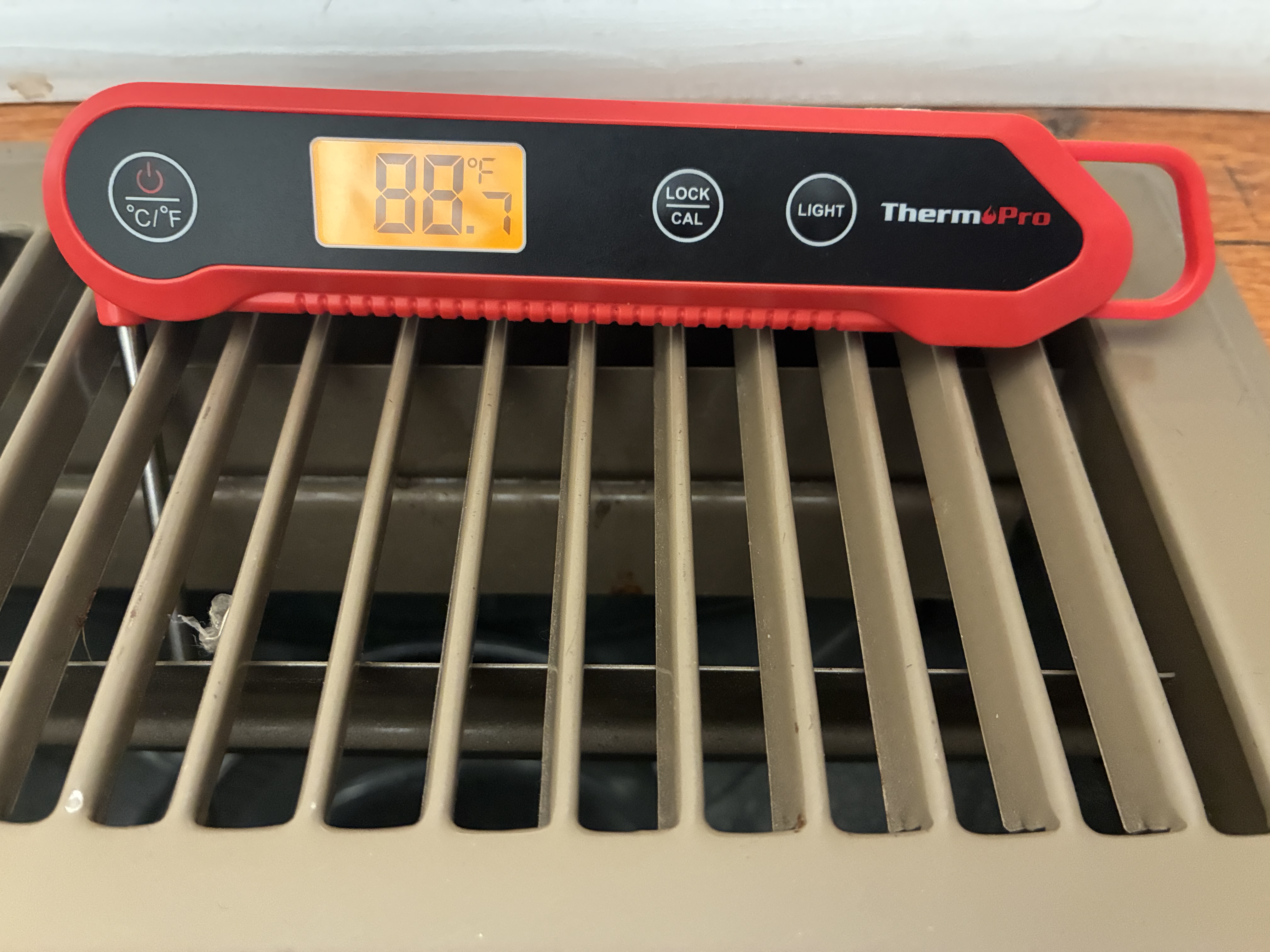
This is only about an 20°F delta from the room temperature, but keep in mind that temperature delta is measured at the supply trunk, right near the indoor coil. Along the way to your registers, the heated air will bleed heat into the ducts, causing the temperature to drop.
Heat pump performance will drop as the outdoor air gets colder
In mildly cold weather, a heat pump will have no trouble scavenging heat from the outdoor air. But as the temperature drops, there will be less and less heat available, and the temperature delta between the return (input) and supply (output) air will drop too.
If it gets too cold, the heat pump won’t be able to operate efficiently and will need to switch to backup heat. However, a cold-climate heat pump can continue to operate well even in extreme weather, and you may never need backup heat at all.
The bottom line is that you should expect a little lower temperatures from your air registers when it’s very cold outside, but if everything is configured correctly with a balance point temperature at your thermostat and backup heat, your heating system will continue to keep your house warm.
Two-stage and variable speed heat pumps operate at lower temperatures
Many heat pumps operate at a single speed, which is their full power mode. However, if you have a two-stage or variable-speed heat pump, you may find that they blow what seems to be quite cool air at the registers.
This is by design! These types of heat pumps can use lower power output and run for longer durations. In very cold weather, they might even run continuously. This is actually a good thing: a properly sized variable speed heat pump will run in heat pump mode for long periods in cold weather, generating a steady supply of warm air at a gentle velocity. You might not even notice it running. This makes for a more comfortable home with fewer temperature swings.
Because of this, you can expect low temperatures from your variable-speed heat pump, unless the outdoor temperature has dropped below the balance point where the backup heat kicks in.
Defrost cycles cause your heat pump to temporarily run in cooling mode
In the winter, it’s normal for your heat pump to regularly switch on defrost mode. Defrost mode happens because frost and ice can build up on your outdoor compressor in the winter.
To eliminate this ice, the unit will automatically switch on defrost mode for several minutes. In this mode, the compressor operation and refrigerant flow reverses, which draws heat from inside the home and pushes it to outdoor condenser. In other words, defrost mode is similar to air conditioning mode, with one important difference: the outdoor fan doesn’t turn on during defrosting. This allows the heat to sit in the outdoor coils and melt any ice buildup.
During defrost, you might hear buzzing or vibration because the white noise of the fan isn’t masking the sound. This sound is normal.
Defrost mode can cause cold air to blow from your registers. If you have backup strip heating, the heat pump may switch them on during this time to prevent that from happening. In my configuration, I have a gas furnace for backup, and my system doesn’t switch it on in defrost, so I get cold air for those few minutes of defrost operation.
You can help reduce the need for defrost mode by keeping your outdoor compressor clear of snow and other obstructions. If the compressor can’t get enough airflow, the temperature around the compressor will drop because it can’t absorb enough heat from the surrounding air. Snow melt can also contribute to ice build up. So, be sure to keep a broom handy to keep a couple feet of clearance around your compressor, especially after snowfall.
Actual heat pump problems to investigate
There are some real problems that can cause your heat pump to not produce enough heat during the winter:
Blocked airflow around outdoor compressor
Always keep the area around your compressor free of any obstructions. Heat pumps work by exchanging heat with the outdoor air, so if airflow is blocked, the heat output inside your home will be reduced. Especially in the winter and after a snowfall, keep an eye out for any snow and ice buildup.
Thick ice buildup that doesn’t melt after a defrost cycle
In extreme winter weather, such as an ice storm, ice buildup can get so heavy that a defrost cycle doesn’t melt all of the ice from your outdoor coils.
Before you call your HVAC professional, there’s a few things you can do. First of all, manufacturers warn that you should never use any sharp tools to chip away at ice buildup. Doing so can crack the copper piping, causing the refrigerant to leak out and leaving you with an expensive repair.
The main thing you should do is simply be patient. It may take several defrost cycles after a major ice buildup for the ice to melt. Because defrost cycles cause your heat pump to essentially operate as an air conditioner, you might find that your house starts to get cold. If this happens, go to your thermostat and manually switch it to emergency heat (which is also known as auxiliary or backup heat). This will allow your heat pump to continue to operate defrost cycles while letting your house be heated by your backup system.
Important: never pour hot water onto your outdoor coil! This can crack the copper piping.
Low refrigerant levels
As a heat pump ages, it’s not uncommon for refrigerant levels to drop. It’s a good idea to get an annual maintenance check of your heat pump. The HVAC technician will do several system checks, such as testing refrigerant levels, sensors, airflow, the blower motor, defrost control, and more.
Backup heat source not working
All heat pumps have a temperature above which they are designed to efficiently operate. Below that threshold, a backup heating system will kick in. If you have a cold climate heat pump, you may never need backup heat at all. For conventional heat pumps, there will be a secondary heating system that the system will switch over to on the coldest days of the year. For me, that’s a pre-existing gas furnace that I had. For other systems, the backup might be heat strips (electric resistance heaters). If the outdoor temperature is below the balance point set in your thermostat and you aren’t getting warm air, the failure might not be the heat pump, but in the backup system.
If you suspect an issue with the backup, check your thermostat for the balance point temperature setting. If the outdoor temperature is below this setting and you aren’t getting heat, you might have a backup failure.
When to call an HVAC professional
To summarize, there’s a few things you can do yourself before calling an HVAC professional for service:
- Inspect your outdoor compressor
- Wait for the defrost cycles to finish
- Double check the balance point setting in your thermostat
- Inspect your air filters, and replace if dirty